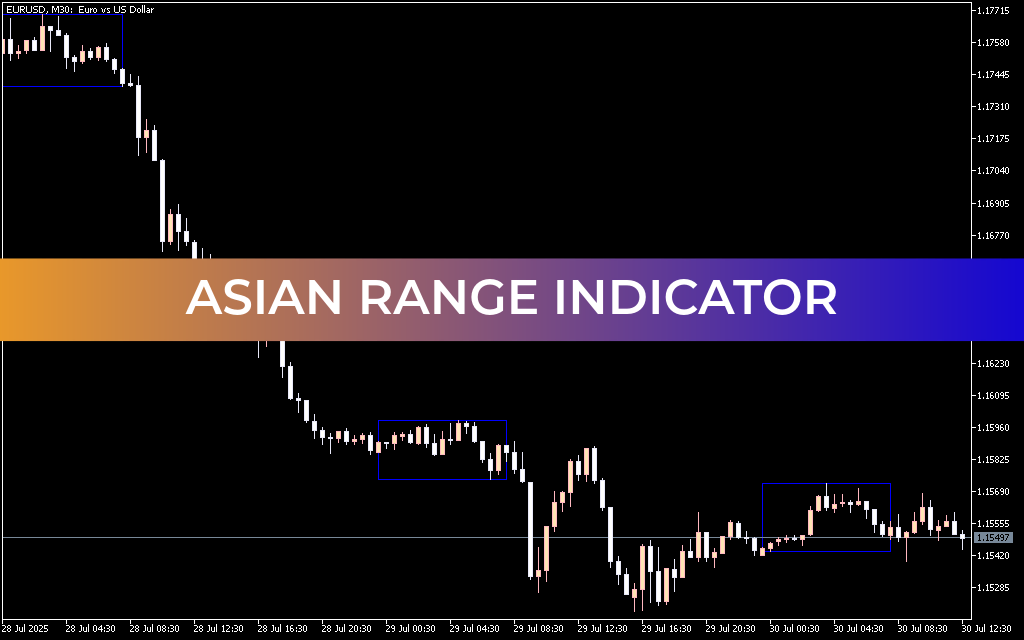
The Asian Range Indicator for MT5 is a powerful trading tool designed to help Forex traders identify breakout opportunities formed during the Asian trading session. By automatically marking the consolidation range that typically occurs in the Asian market, the indicator allows traders to capture strong price movements that often follow during the London and New York sessions.
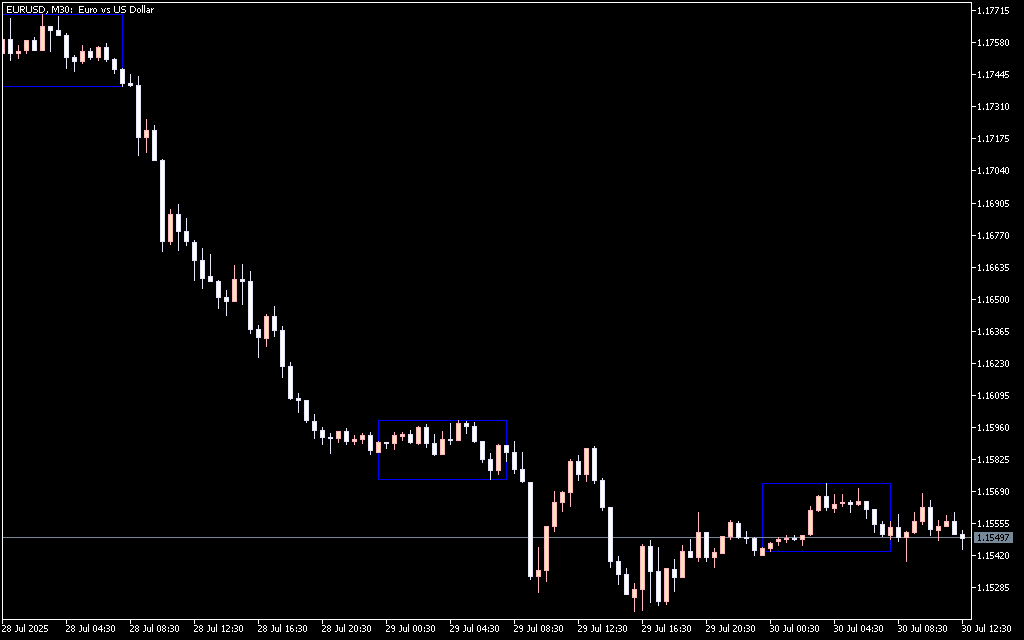
In Forex trading, the market usually moves slowly during the Asian session before volatility increases later in the day. The Asian Range Indicator highlights this consolidation phase by drawing colored rectangles on the chart, making it easy to see the price range where the market has been trading. Once the price breaks above or below this range, traders can quickly identify potential buy or sell opportunities.
This indicator is especially helpful for traders who do not want to manually track session times or analyze complex market structures. Instead, the tool visually displays the Asian range, allowing traders to focus on simple and effective breakout trading.
Key Features of the Asian Range Indicator
- Automatically identifies Asian session consolidation zones
- Draws colored rectangles to mark the trading range
- Provides clear breakout signals for buy and sell trades
- Works well with shorter timeframes such as M5, M15, and H1
- Suitable for beginner and experienced traders
- Compatible with the MetaTrader 5 (MT5) platform
Best Currency Pairs to Use
The Asian Range strategy performs particularly well with currency pairs that involve the Japanese Yen, as these pairs often move actively after the Asian session ends. Some of the most effective pairs include:
- USD/JPY
- EUR/JPY
- GBP/JPY
- GBP/USD
- EUR/USD
These pairs tend to produce strong breakout movements when the market transitions from the Asian session into the London trading session.
Recommended Timeframes
For the best results, traders typically use the Asian Range Indicator on lower timeframes, where breakout opportunities appear more frequently.
- M5 (5 minutes)
- M15 (15 minutes)
- H1 (1 hour)
Shorter timeframes allow traders to quickly react when price breaks out of the Asian consolidation zone.
Buy Signal
A bullish breakout signal occurs when the price moves above the upper boundary of the Asian range. This indicates increasing buying pressure and potential upward momentum as the London session begins.
Trading idea:
Enter a buy trade once the candle closes above the upper line of the range. Some traders prefer waiting for a retest of the breakout level before entering to confirm the move.
Sell Signal
A bearish breakout signal appears when the price breaks below the lower boundary of the Asian range. This suggests strong selling pressure and the potential start of a downward trend.
Trading idea:
Enter a sell trade after the price breaks below the range. Like with buy setups, a retest of the breakout zone can provide additional confirmation.
Trading Strategy Tip
Although the Asian Range Indicator works well on its own, combining it with other trading tools can significantly improve accuracy. For example, many traders use it together with:
- Retest or retouch strategies
- Support and resistance levels
- Volume indicators such as Better Volume MT5
- Trend confirmation tools
Waiting for a retest of the breakout level often helps filter out false breakouts and increases the probability of successful trades.
Conclusion
The Asian Range Indicator MT5 is one of the most popular breakout trading tools for Forex traders. By clearly identifying the Asian session consolidation range, the indicator helps traders capture powerful price movements that occur during the London and New York sessions.
Whether you are a beginner or an experienced trader, this indicator simplifies market analysis and makes it easier to find high-probability trading opportunities. With proper risk management and confirmation strategies, the Asian Range Indicator can become a valuable addition to any Forex trading system.
FAQ
2 Downloads
Published:
Mar 08, 2026 12:54 PM
Category: