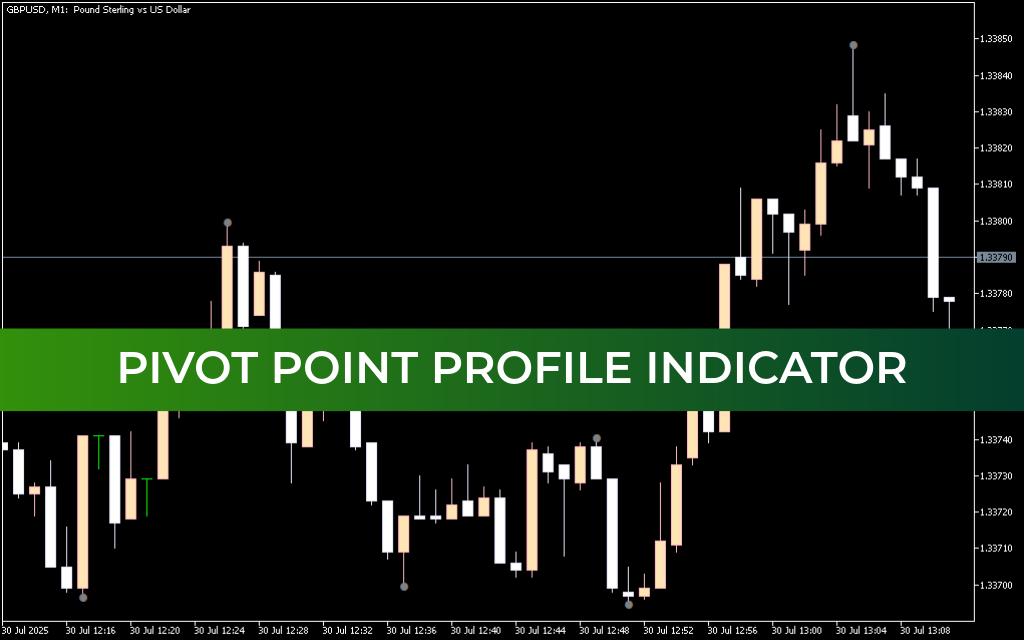
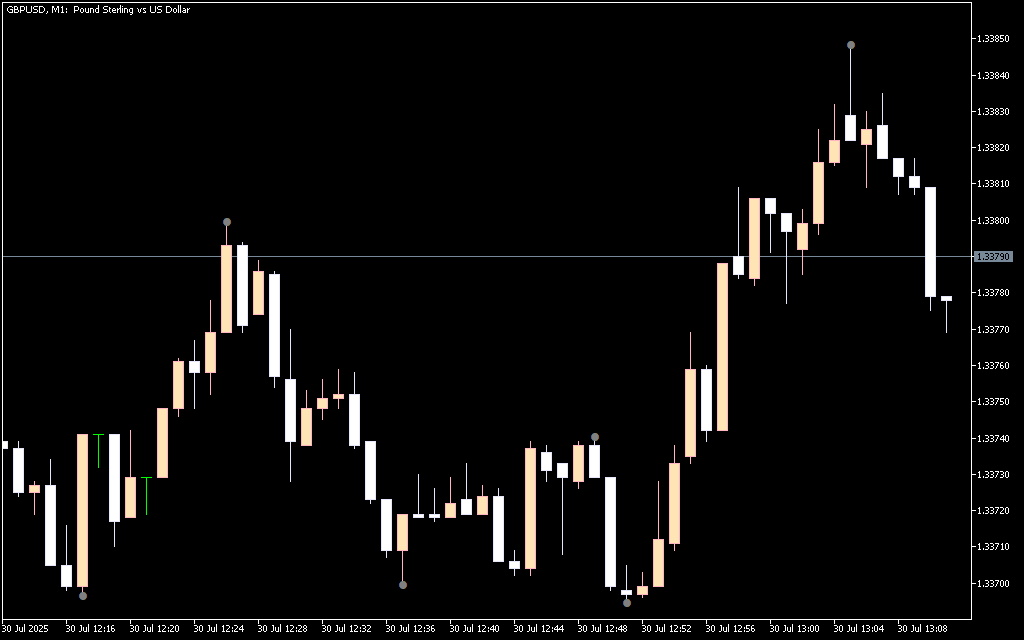
The Pivot Point Profile Indicator by LuxAlgo for MetaTrader 5 combines volume distribution with price structure to provide traders with a clear view of high- and low-activity pivot zones. Designed for advanced users of Smart Money Concepts (SMC) or price action strategies, it visualizes Supply And Demand layers directly on pivot points, making it ideal for intraday, swing, and institutional-style trading.
Key Features of the Pivot Point Profile Indicator
The indicator overlays volume histograms on pivot zones to reveal areas of market interest:
- High-volume resistance zones: Large red histogram blocks often indicate strong selling pressure or supply areas.
- Support/accumulation zones: Blue histogram blocks show lower-volume pivots that may act as support.
- Equilibrium zones: Concentrated white-colored pivots highlight areas where price could react sharply or reverse.
- Volume shifts: Sudden changes in histogram thickness can suggest potential reversals or breakout opportunities.
This visual mapping helps traders identify institutional interest zones without relying on traditional buy/sell signals. It can be combined with candlestick analysis, order blocks, or other structural methods to improve timing and trade confidence.
Benefits for Traders
The Pivot Point Profile Indicator helps traders:
- Spot critical support and resistance levels based on volume intensity
- Identify areas where price is likely to react or reverse
- Enhance entry and exit precision using institutional-style insights
- Integrate pivot and volume profile analysis into multiple trading strategies
Conclusion
The Pivot Point Profile Indicator for MT5 offers a professional-grade view of Market Structure by merging pivot points with volume profile logic. Its high-resolution visualization of supply and demand zones helps traders make more informed decisions and brings institutional-grade analysis to MetaTrader. Whether scalping, swing trading, or planning breakout strategies, this indicator provides a deeper understanding of where price may find support, resistance, and equilibrium.
FAQ
13 Downloads
Published:
Feb 28, 2026 10:13 AM
Category: