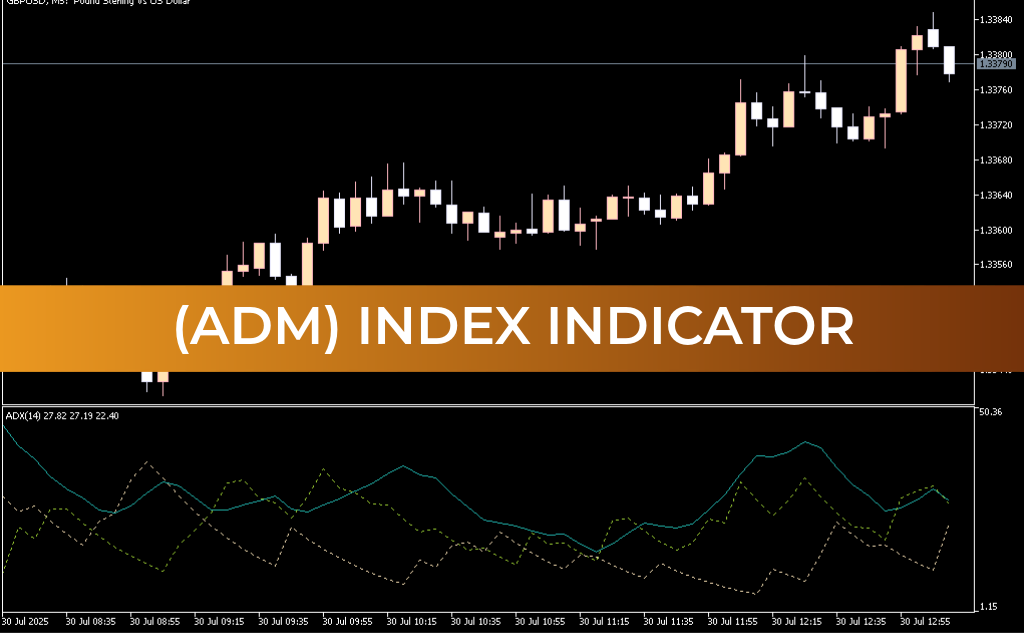
The Average Directional Movement Index (ADX) is a popular technical indicator for MT5 that measures the strength of a trend, regardless of its direction. Developed by J. Welles Wilder and introduced in his book New Principles of Technical Trading Systems, the ADX helps traders identify trending markets and decide whether to employ trend-following strategies or range-bound approaches.
What Is the ADX Indicator?
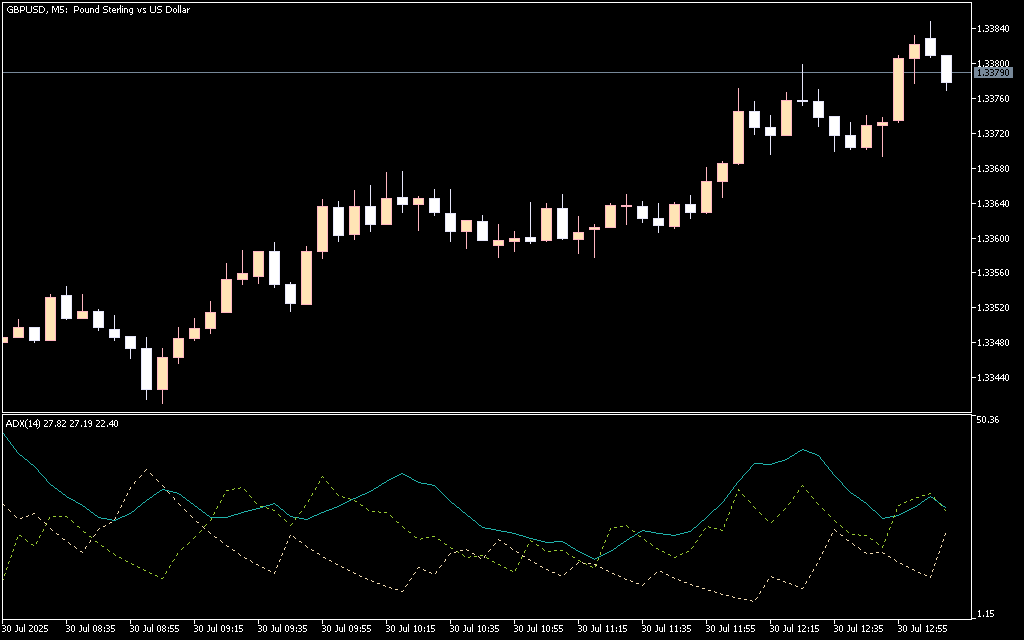
The ADX indicator is composed of three lines:
- +DI (Positive Directional Indicator): Measures the strength of upward movement
- −DI (Negative Directional Indicator): Measures the strength of downward movement
- ADX line: Represents overall Trend Strength
The indicator typically ranges from 0 to 100, with higher values signaling stronger trends. Unlike many other indicators, ADX is non-directional, meaning it measures trend strength rather than trend direction.
Key Features
- Measures trend strength in any market or timeframe
- Helps determine whether the market is trending or consolidating
- Provides clear guidance for trend-following or non-trending strategies
- Uses crosstalk between +DI and −DI to signal potential buy or sell opportunities
How to Use the ADX Indicator
The ADX helps traders understand the strength and sustainability of a trend:
- Trend Strength:
- ADX above 25 → strong trend
- ADX below 20 → weak trend or ranging market
- Trend Weakening:
- Falling ADX from high levels indicates a trend may be ending or losing strength
- Buy and Sell Signals:
- Buy Signal: +DI crosses above −DI while ADX > 25
- Sell Signal: −DI crosses above +DI while ADX > 25
These signals allow traders to enter trades in the direction of the trend with higher probability setups.
ADX Trading Strategy
- Identify trend direction using +DI and −DI:
- +DI > −DI → uptrend → consider long trades
- −DI > +DI → downtrend → consider short trades
- Confirm trend strength with ADX:
- ADX > 25 indicates the trend is strong enough to trade
- ADX < 20 suggests avoiding trend-based strategies
- Monitor ADX for trend weakening or trend reversals.
- Combine ADX signals with other technical indicators or support/resistance levels for confirmation.
Benefits of Using ADX
- Objective measure of trend strength
- Works on multiple markets and timeframes
- Provides early warning when trends are weakening
- Helps avoid trading in ranging or low-momentum markets
- Clear buy and sell signals through +DI and −DI crossovers
By incorporating ADX into a trading strategy, traders can make more informed decisions about trend-following or range-bound setups, increasing efficiency and potential profitability.
Conclusion
The ADX Indicator for MT5 is a versatile tool for identifying trend strength and improving trading decisions. By analyzing +DI, −DI, and the ADX line, traders can determine whether the market is trending, identify strong entry points, and avoid low-probability trades in consolidating conditions. Properly used, ADX can enhance both manual and automated trading strategies.
FAQ
1 Download
Published:
Feb 27, 2026 12:19 PM
Category: