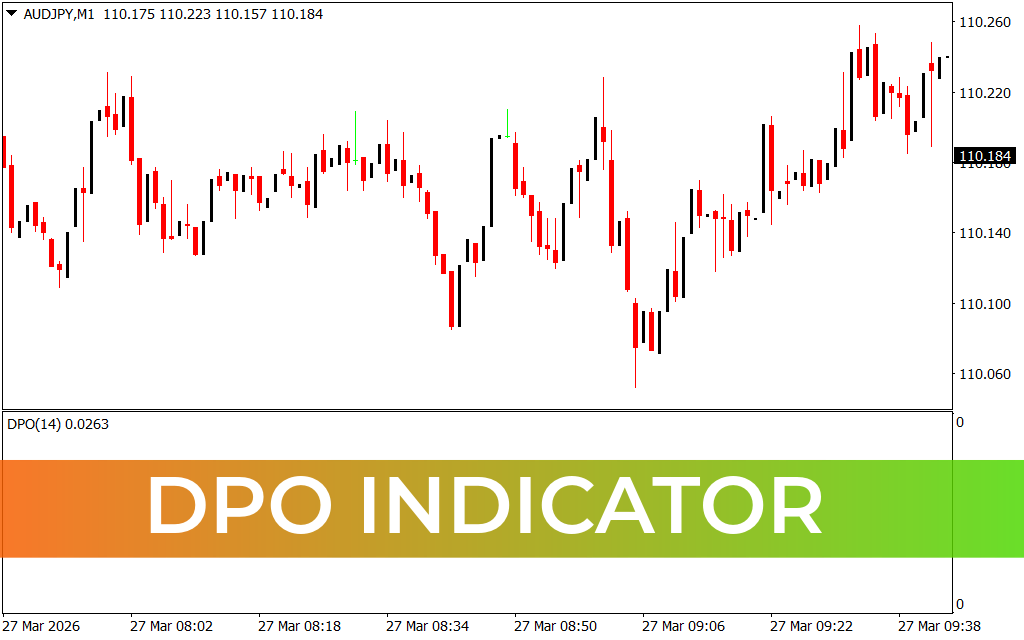
The DPO (Detrended Price Oscillator) is a simple yet effective Momentum Indicator that highlights overbought and oversold conditions in the market. It is designed to remove long-term trends from price data, allowing traders to focus on short-term cyclical movements.
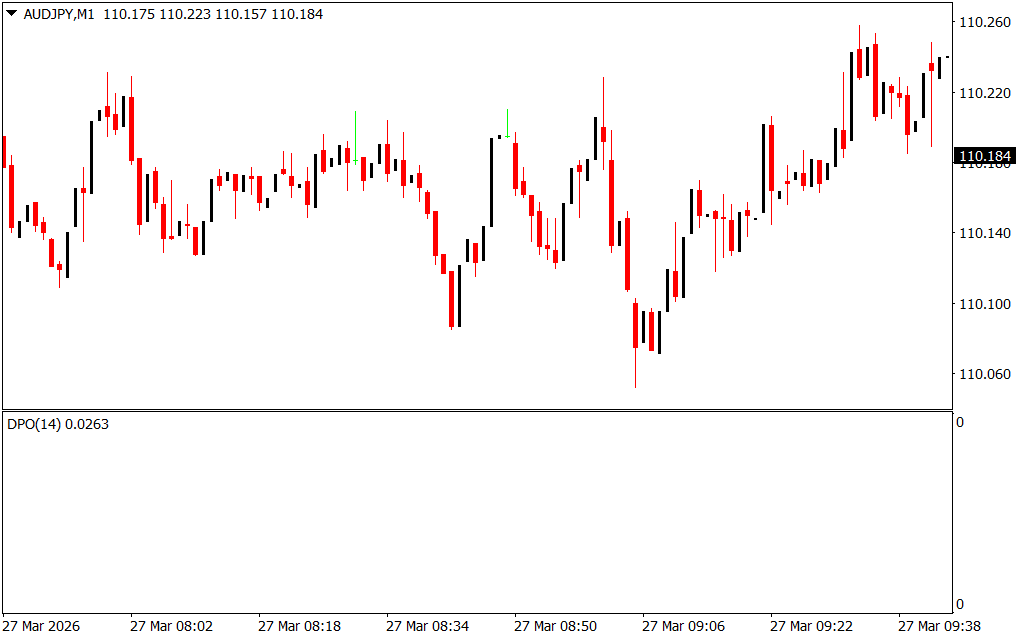
- Oscillation range: 0 to ±0 (centered around zero)
- Best timeframes: Weekly, Monthly (for long-term trend insight)
- Suitable for: All forex pairs and instruments
- Trading style: Swing trading, trend-following setups
How the DPO Indicator Works
The DPO functions like any momentum oscillator:
- When the indicator approaches +0, it signals an overbought condition. Traders may consider short positions or exiting long trades.
- When the indicator approaches -0, it signals an oversold condition. Traders may consider long positions or exiting short trades.
⚠️ Note: The DPO does not indicate trend direction but instead focuses on oscillations around the mean, which makes it ideal for identifying potential reversals.
Buy Signal
- DPO approaches -0 (oversold level)
- Confirms a short-term bottom
- Enter a long position or exit shorts
Sell Signal
- DPO approaches +0 (overbought level)
- Confirms a short-term top
- Enter a short position or exit longs
Trading Tip
- For short-term trades, identify DPO signals on weekly/monthly charts to determine larger trend cycles, then take trades on lower timeframes (daily/H4).
- Combine with other indicators like Moving Averages, RSI, or MACD to reduce false signals.
Example
- On the EUR/USD Weekly chart, the DPO hits the oversold zone (-0), signaling a potential rally.
- Later, it reaches the overbought zone (+0), signaling a potential pullback or short opportunity.
Conclusion
The DPO Indicator is a momentum oscillator that helps traders identify overbought and oversold zones, providing clear entry and exit points. While it can generate false signals on its own, combining it with other technical tools increases reliability.
- Free to download and easy to use on MT4.
FAQ
Published:
Mar 28, 2026 19:46 PM
Category: