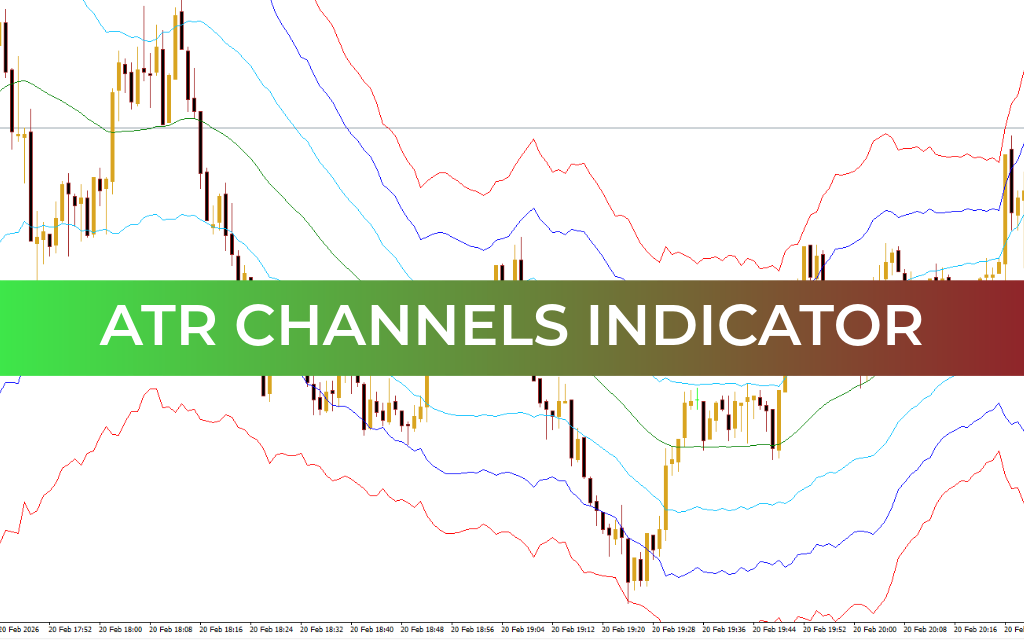
The ATR Channels Indicator is a dynamic trend channel tool for MT4 that helps traders visualize price channels based on volatility. Unlike classical static channels, the ATR Channels use the Average True Range (ATR) combined with moving averages to construct multiple, adjustable channels around the price, reflecting real-time market volatility. This makes it an effective tool for both Scalping and long-term trading strategies.
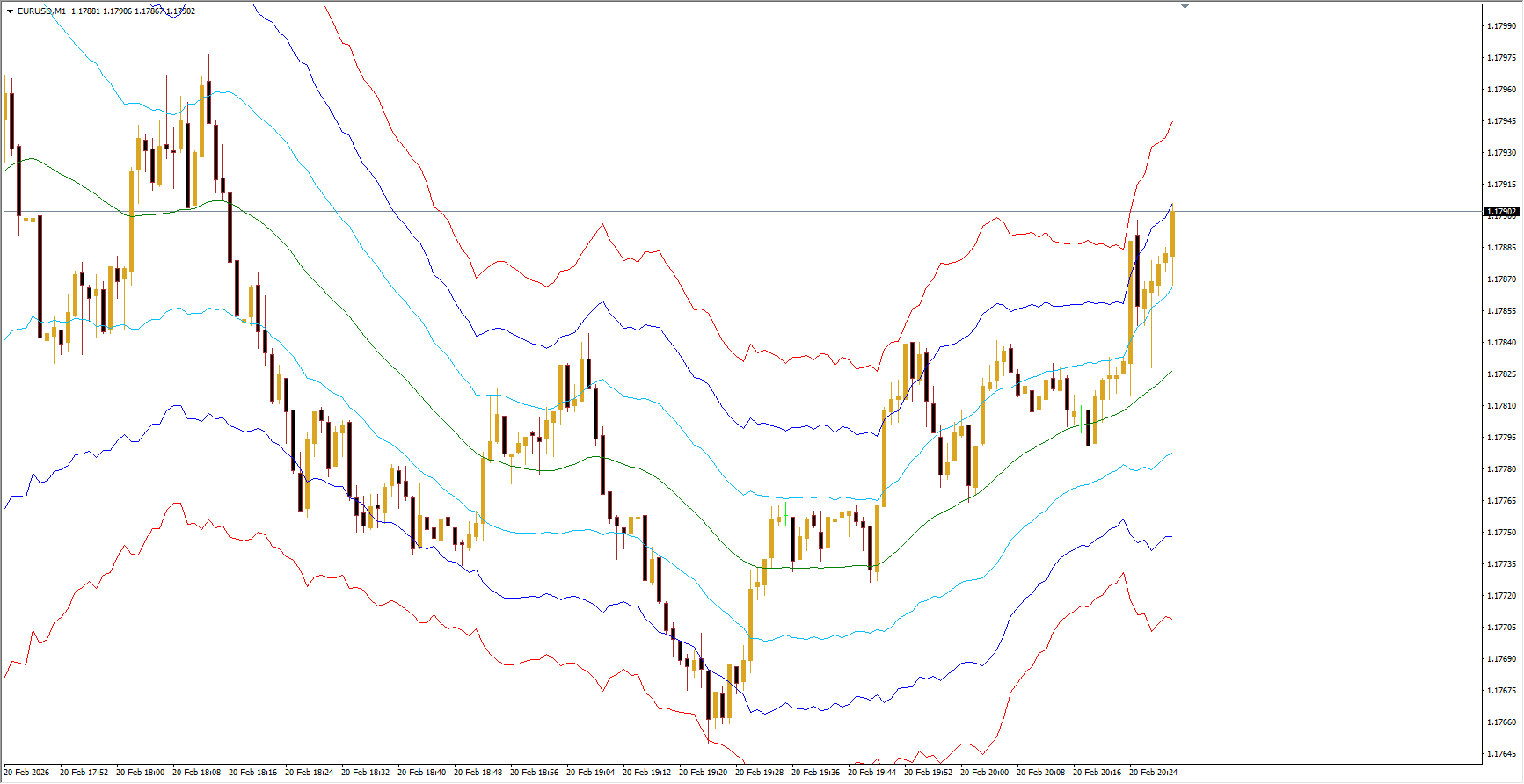
What Is the ATR Channels Indicator?
Traditional channel strategies are limited by static boundaries that don’t adapt to changing market volatility. The ATR Channels Indicator solves this problem by building dynamic channels that adjust according to price movement and ATR values.
Traders can assign a coefficient to each channel to narrow or expand it based on their strategy.
It is a multi-timeframe tool and can be applied to any currency pair, stock, or financial instrument, making it suitable for both short-term and long-term trades.
Key Features and Benefits
Dynamic Support & Resistance: The multiple channel lines act as key levels for trade entries, exits, and stop placement.
Trend Direction: The slope of the channel indicates market direction:
Upwards: Favor buy positions
Downwards: Favor sell positions
Horizontal: Flat market; trade rebound opportunities
Trade Planning: Channels provide clear stop-loss and take-profit levels, simplifying trade management.
ATR Channels Trading Strategy
Sell Strategy
ATR Channel must be pointing downwards.
Price should close below the upper boundary after testing it.
Place stop-loss a few pips above the top line of the channel.
First profit target: midline of the channel.
Close the sell position completely at the lower boundary of the second-last channel.
Buy Strategy
ATR Channel must be pointing upwards.
Price should close above the lower boundary after testing it.
Place stop-loss a few pips below the bottom line of the channel.
First profit target: midline of the channel.
Close the buy position completely at the upper boundary of the second-last channel.
Conclusion
The ATR Channels Indicator is a versatile technical analysis tool that helps traders identify trends, market phases, and potential support/resistance zones. It works well for both scalpers and long-term traders. However, like all trading tools, it should be used alongside other confirmatory indicators or Price Action analysis to increase the probability of successful trades.
FAQ
2 Downloads
Published:
Feb 20, 2026 13:48 PM
Category: